

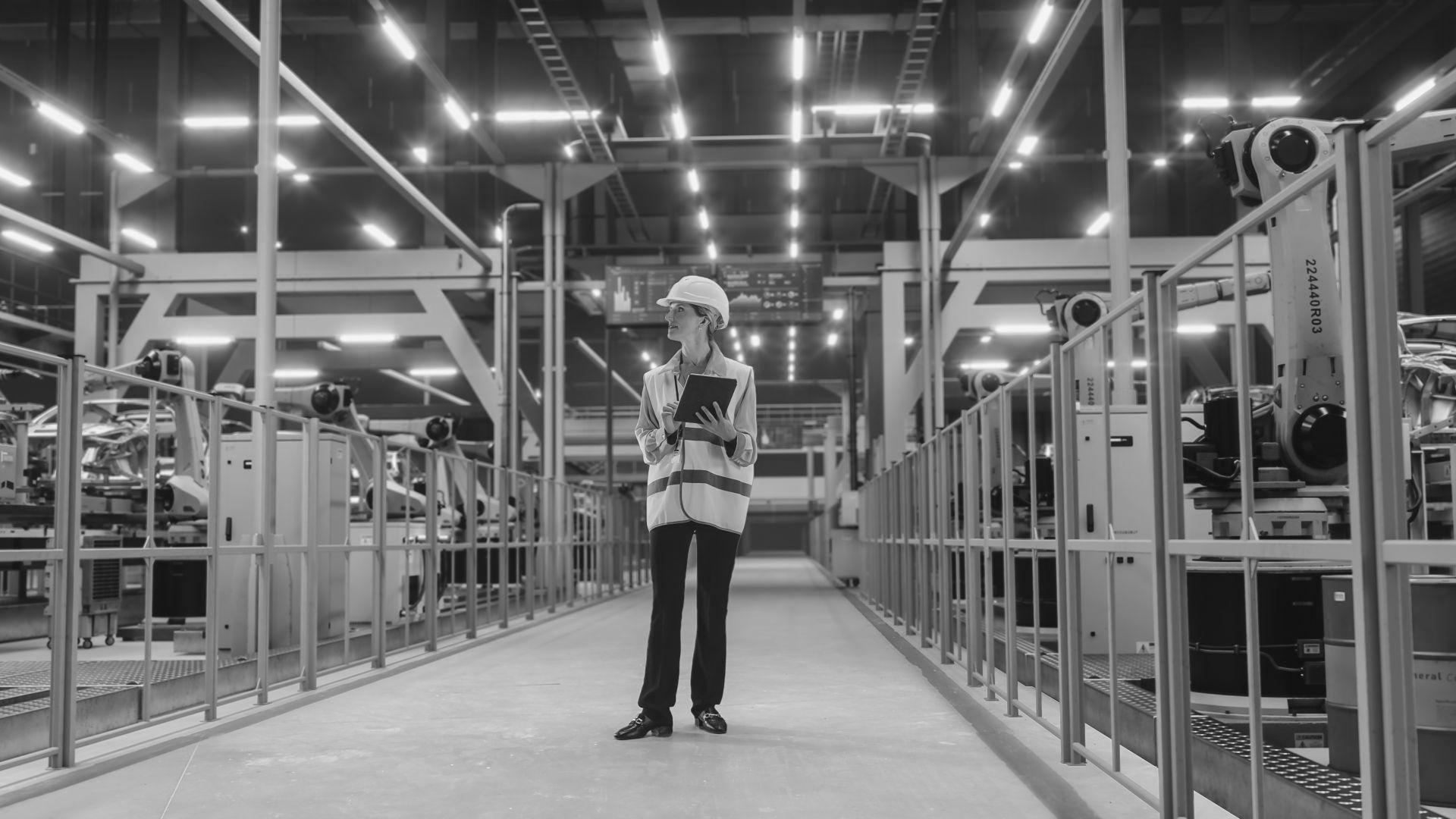
As a process engineer who stumbled into the world of digital marketing, I’ve had a front-row seat to a fascinating transformation. The creative energy, the storytelling, the human connection that makes great marketing work – none of that has changed. What’s changed is that we now have the tools and frameworks to make that magic repeatable, scalable, and measurable.
Here’s what I’ve learned: the challenges marketing leaders face today aren’t new. We’ve been solving nearly identical problems in manufacturing for decades. The difference is that engineering has always had permission to be both systematic and human-centered. Now marketing gets to do the same.
Marketing as a Continuous System
Traditional marketing operated in batches. Plan, execute, measure, repeat. Each initiative had a clear beginning and end. There’s comfort in that structure, and honestly, there’s beauty in the focused intensity of a campaign launch.
But here’s the reality: your customers don’t experience your brand in batches. They’re always in motion, always evaluating, always comparing. They see your ad, visit your site, get distracted, come back three weeks later, read reviews, abandon their cart, see a retargeting ad, and maybe, just maybe, convert months after that first touch.
This is why marketing needs to evolve from campaigns to continuous systems. Not because campaigns are bad, but because the customer journey demands something more responsive. In engineering, we call this continuous integration – systems that learn and adjust in real time without requiring a complete shutdown and restart.
Your marketing should work the same way. Not cold and mechanical, but intelligently adaptive. Like a great conversation that flows naturally based on what the other person needs in that moment.
Five Engineering Principles That Transform Marketing
1. Measure Everything, Know What’s Really Happening
In manufacturing, we place sensors throughout production lines, monitoring temperature, pressure, flow rates, all with quality parameters. These sensors don’t just collect data, they tell us stories about what’s working and what’s breaking down. They help us understand the system so we can make it better.
Your marketing needs the same visibility. Every click, search, purchase, abandoned cart, email open, and video pause is a signal telling you something important about your customer’s experience and intent.
But the magic isn’t in collecting this data, it’s in using it to respond. A customer browses a product three times? That’s a signal. They abandon a cart? That’s another signal. Each one should trigger a thoughtful, relevant response, not a generic blast.
Here’s the key: you don’t need perfect data to make better decisions. In engineering, we work with directional information all the time. We take action, measure the result, adjust, and improve. It’s not about achieving perfection, it’s about building a system that gets smarter over time.
2. Build Modular, Reusable Assets
There’s this misconception that efficiency kills creativity. I’ve never believed that. Software developers don’t start from scratch every time, they use libraries and frameworks that free them up to solve interesting problems. Lego has 3,400 molds that create millions of unique models. Tesla’s modular design philosophy hasn’t made their cars less innovative; it’s made innovation faster.
Marketing should work the same way. Build modular content objects – video snippets, dynamic templates, copy blocks, visual assets – all designed to be reused, recombined, and deployed across platforms.
This isn’t about limiting creativity. It’s about eliminating the soul-crushing work of recreating the same assets over and over so your team can focus on the creative challenges that actually matter. It’s about getting good ideas into market faster. It’s about consistency without rigidity.
When you build this way, you’re not sacrificing the human touch, you’re amplifying it by removing the obstacles that keep great ideas trapped in endless production cycles.
3. Work in Sprints, Not Annual Plans
Annual planning cycles can’t keep pace with customer expectations. Marketing teams should adopt sprint-based workflows: rapid prototyping of messages tested live with small audiences, iteration based on performance data rather than assumptions, and comfort with learning from degrees of success rather than waiting for perfect wins.
In lean manufacturing, we celebrate small improvements, down to the second. Marketing should do the same, turning your department from a slow-moving ship into a fleet of nimble vessels.
4. The Funnel Isn’t Dead, It’s Dynamic
There’s a narrative going around that the marketing funnel is obsolete. I respectfully disagree. Customers still move from awareness to consideration to purchase to advocacy. That journey hasn’t disappeared, it’s just become wonderfully messy and human.
People don’t follow a straight line anymore. They loop back, abandon and return, enter at different stages, get influenced by multiple touchpoints simultaneously. They behave, in other words, like actual human beings making real decisions.
The solution isn’t to abandon the funnel, it’s to make it dynamic with continuous feedback loops. In manufacturing, sensors constantly feed data back into the system, allowing for real-time adjustments. Marketing needs the same approach. When someone’s behavior signals where they are in their journey, your system should respond appropriately – not with scripted automation, but with relevant, helpful interactions.
Think of it as Total Quality Management for customer experience. Everyone on your team owns the quality of that journey, not just their piece of it. When you approach it this way, you’re not manipulating people through a funnel, you’re creating a system that genuinely serves them better.
5. AI as Your Toolchain
In manufacturing, automation handles repetitive, precision-critical tasks so humans can focus on problem-solving and innovation. AI should do the same for marketing.
Generative AI accelerates content production. Predictive AI identifies high-value intervention moments. Automation ensures consistent execution across channels. This frees your team to focus on strategy, storytelling, and human connection, things algorithms can’t replicate.
The Missing Link: Speaking Your CFO’s Language
Here’s the challenge that keeps marketing leaders up at night: according to a poll by MarketingDive, only 22% of marketers feel they have sufficient data to justify their value to their CFOs. That’s not just a perception problem, it’s a credibility crisis.
The gap exists because marketing has traditionally relied on soft metrics and gut feelings while finance demands hard numbers and measurable outcomes. An engineering mindset bridges this divide, not by making marketing cold and transactional, but by making success visible and repeatable.
Here’s the translation guide:
- Marketing campaigns = new product investments with projected ROI
- A/B testing = R&D, systematically validating hypotheses
- KPIs = proof of concepts supporting budget requests
- Attribution modeling = root cause analysis identifying what drives results
When you can show that Campaign A generated X revenue at Y cost with Z customer lifetime value, you’re speaking finance’s language. When your marketing tech stack reduced customer acquisition cost by 15% while improving lead quality, you’ve made a business case using metrics that matter.
Integration isn’t a nice-to-have, it’s the foundation of credibility and influence.
What This Actually Looks Like
Getting there requires three things:
Unified data architecture. All customer interactions, campaign performance, and business outcomes flowing into one coherent system. You can’t optimize what you can’t measure consistently.
Cross-functional teams. Break down silos between marketing, finance, data, and operations. The best results come from integrated thinking, not isolated departments.
Continuous improvement mindset. Regular retrospectives on what worked and why. Root cause analysis for underperforming campaigns. Documentation of what’s repeatable and scalable.
The Human Side of Engineering Thinking
If this all sounds too systematic, too mechanical, here’s what every experienced engineer knows: systems fail without engaged, empowered people. I’ve seen elegant process improvements collapse because the team didn’t understand why they mattered, lacked proper training, or felt threatened by the changes.
Empathy isn’t opposed to engineering, it’s the foundation. The goal has never been to replace human creativity with algorithms or turn marketers into robots. It’s about freeing your team from repetitive, soul-draining tasks so they can focus on the work that requires genuine human insight: understanding what customers actually need, crafting stories that resonate, building relationships that matter.
The best marketing of the future will think like engineers, design like architects, and create like artists. It will build systems that run intelligently in the background while humans focus their energy on connection, creativity, and innovation – the things that make marketing worth doing in the first place.
Moving Forward Together
Customer expectations are being shaped by the smoothest experiences they encounter anywhere – ordering coffee, streaming shows, booking rides. Meeting those expectations requires the precision and adaptability that comes from good systems thinking, combined with the empathy and creativity that makes marketing human.
For marketing leaders, this engineering mindset offers more than efficiency. It offers credibility with the C-suite, clear proof of impact, and a framework for sustainable growth rather than campaign-to-campaign uncertainty. It offers a way to scale what works without losing the human touch that makes it work in the first place.
The convergence of marketing and engineering thinking isn’t coming. It’s already here. The question is whether your organization will lead this evolution or find itself struggling to catch up.
Ready to Build Your Marketing Engine?
At Funnel Digital Marketing, we help organizations achieve exactly this kind of transformation. We bring engineering rigor to marketing strategy through:
- Complete traceability of every marketing effort—knowing what’s working and why
- Continuous testing and improvement—building systems that get smarter over time
- Cohesive platform strategies—unified data that tells a complete story
- Forward-thinking problem-solving—adapting to challenges in real time
We believe marketing should be both systematic and human, both measurable and meaningful. If you’re ready to build a marketing engine that proves its value while genuinely serving your customers, let’s talk.
Contact us to start the conversation about what’s possible when marketing thinking meets engineering discipline.
The future of marketing runs on continuous systems, modular thinking, and intelligent adaptation all wrapped in the human understanding that engineering alone can’t provide. Master this balance, and you’ll build something remarkable: marketing that works for your customers, your team, and your bottom line.


